Architecture That Rain Cannot Destroy
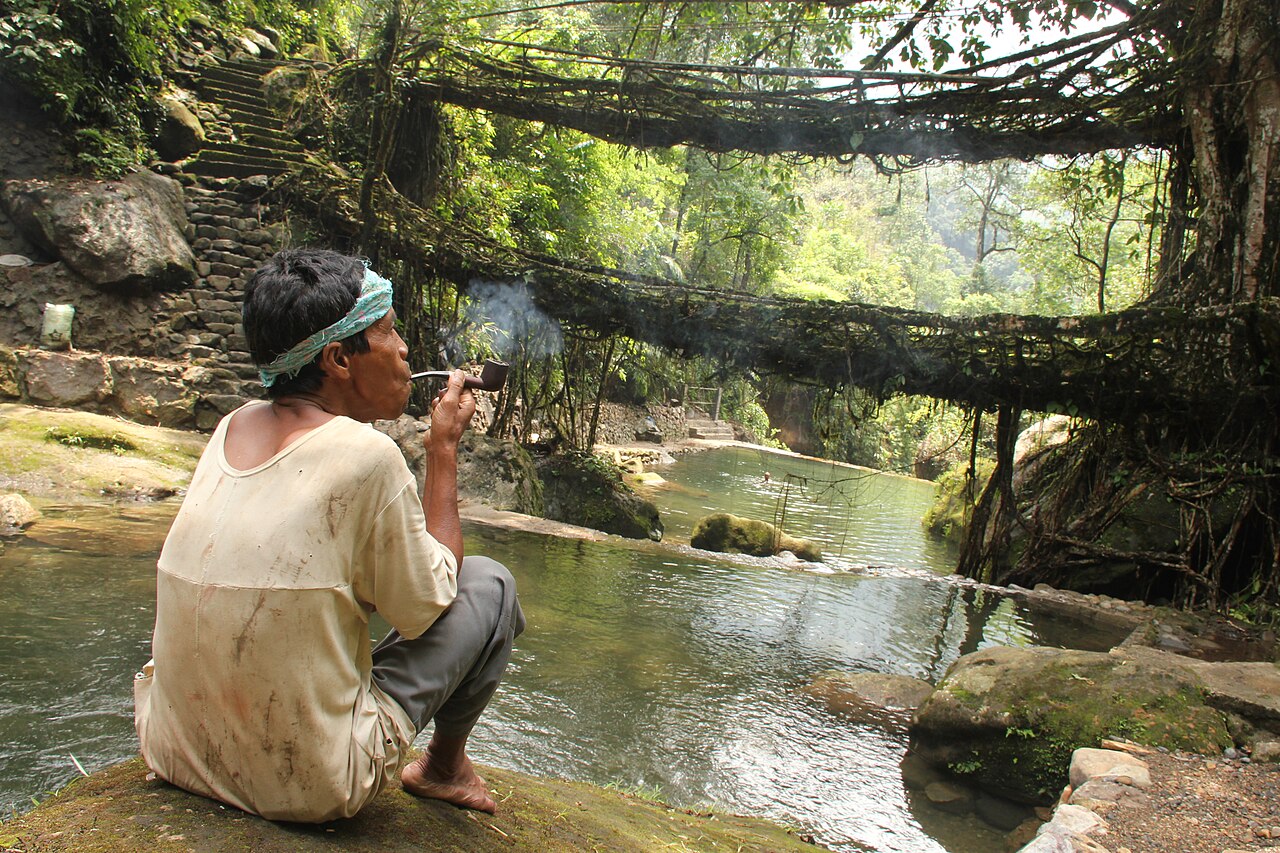
Every man-made bridge the War Khasi people built across their monsoon rivers eventually rotted or washed away. Bamboo lasted two or three seasons. Wood, a few more. So somewhere centuries back, they stopped fighting the rain and started collaborating with it: guiding the aerial roots of living rubber fig trees across streams, weaving them through hollowed betel trunks, waiting a generation for the roots to thicken into a crossing.
The result is the only bridge technology on Earth that gets stronger in the wet: the trees drink the monsoon and grow. Some bridges in use today are estimated at 200–500 years old, still alive, still thickening.
Which is why seeing them in the dry season is seeing them out of context. The monsoon — rivers raging beneath, moss glowing, mist in the canopy — is what they were grown *for*.
What Monsoon Adds
The rivers come alive. In winter, many root bridges span modest streams. In July the same streams are white torrents — and suddenly you understand viscerally why a washable bamboo bridge was never going to be enough.
The forest turns primeval. These bridges live in subtropical ravine forest that in monsoon becomes almost absurdly lush — ferns from every rock, moss on every root, butterflies in the humid gaps between showers. Photographers: the wet, saturated green plus soft cloud light is the best palette of the year.
The bridges glisten. Wet living root has a dark, sculptural sheen that dry-season photos simply don't capture.
Which Bridge in Monsoon? (Choose Honestly)
Riwai Root Bridge (Mawlynnong) — the monsoon pick. A ten-minute paved walk from the road near Asia's Cleanest Village. Single-span, ancient, dramatic in high water — and accessible in almost any weather. This is the one we recommend for most monsoon guests, combined with Mawlynnong village itself.
Planning to visit?
Private cab from ₹4,500 · Local driver · Book free, pay a token to confirm
Ummunoi & nearby bridges (Laitkynsew side) — shorter, steep-ish treks; doable in monsoon with good shoes and a dry-morning window. Ask locally on the day.
The Double Decker (Nongriat) — the honest caveat. The most famous bridge in the state sits at the bottom of 3,500 stone steps, and in peak monsoon those steps run with water. For experienced trekkers it's magnificent — waterfalls the whole descent. For everyone else, we genuinely recommend saving Nongriat for October–April and taking Riwai now. A bridge is not worth a bad fall in a remote gorge.
Respect Notes
These are living community infrastructure, not installations. Cross gently, don't carve or pull at roots, pay village entry fees happily (they fund the caretaking), and remember someone's great-great-grandparents planted the crossing you're photographing.
Doing It Right
The classic monsoon combination is a Mawlynnong day: the Riwai bridge in the morning mist, the village and its sky-viewing towers midday, and the border viewpoint over the flooded Bangladesh plains before heading back over the plateau through the rain.
WhatsApp +91 8855853857 and we'll fold the root bridges into your monsoon circuit — the right bridge for your group, in the right weather window.