Something I Didn't Expect
I was doing a pickup from Shillong airport when the driver — a young guy from the Khasi Hills, maybe 25 — mentioned casually that his family home belonged to his youngest sister. I must have looked confused, because he laughed and explained: in Khasi society, it's the women who inherit. Property, the family name, the ancestral home — all of it passes through the mother's line.
I'd read about the Khasi matrilineal system before my first visit to Meghalaya, but hearing it explained by someone for whom it was simply a fact of ordinary life was different. It made me look at the villages, the markets, the roadside stalls differently. The women running businesses in Police Bazaar, the grandmothers who seemed to be at the centre of everything in every household — it wasn't coincidence.
The Khasi World, From the Inside Out
The Khasi are the largest tribal group in Meghalaya and one of the very few matrilineal societies still functioning in the world. In most families, children carry the mother's clan name (called *kur*). The youngest daughter — the *khadduh* — inherits the ancestral home and is responsible for caring for elderly parents. The mother's brother (*kñi*) plays a role closer to a traditional father figure.
This sometimes confuses visitors into thinking Khasi men are somehow diminished in status. They're not — men typically lead in public life, politics, and religious ceremony. But the domestic and economic foundation rests with women in a way that's rare anywhere in the world, and visiting Meghalaya with that knowledge adds a layer to everything you observe.
A Language Unlike Any Other in India
Khasi belongs to the Austroasiatic language family — linguistically related to languages spoken in Southeast Asia, not to Hindi, Bengali, or any of the other languages around it. It's a genuine outlier, and linguists find it fascinating for exactly that reason.
For centuries, Khasi had no written form. It was entirely oral — songs, stories, and history passed down by memory and repetition. Then Welsh missionaries arrived in the 19th century and introduced the Roman script. Meghalaya is now one of the most literate states in India, and the Khasi language is written in Roman letters to this day.
If you have even a day in a Khasi village, try a few phrases. "Khublei" means thank you and is pronounced roughly "koob-lei." It'll get you a warm response almost every time.
Festivals Worth Planning Your Trip Around
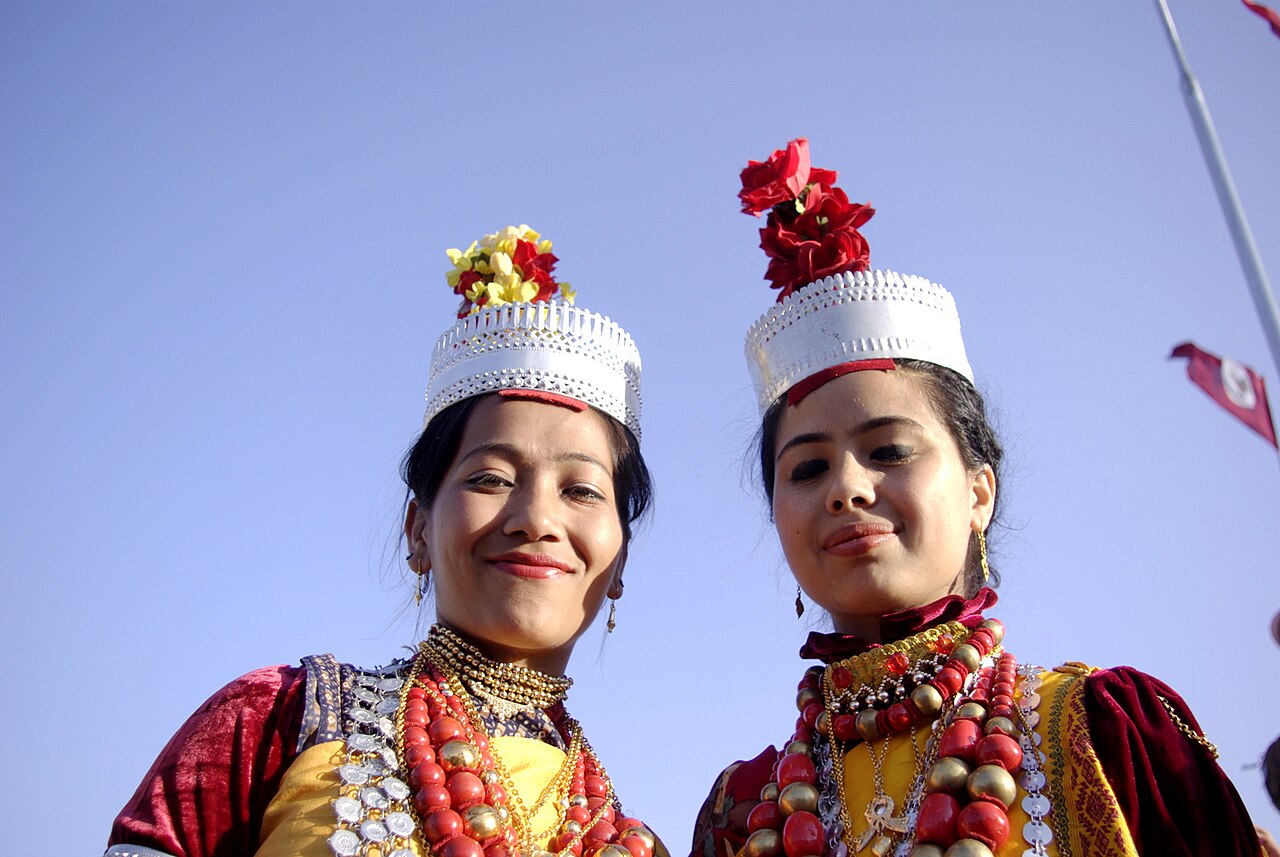
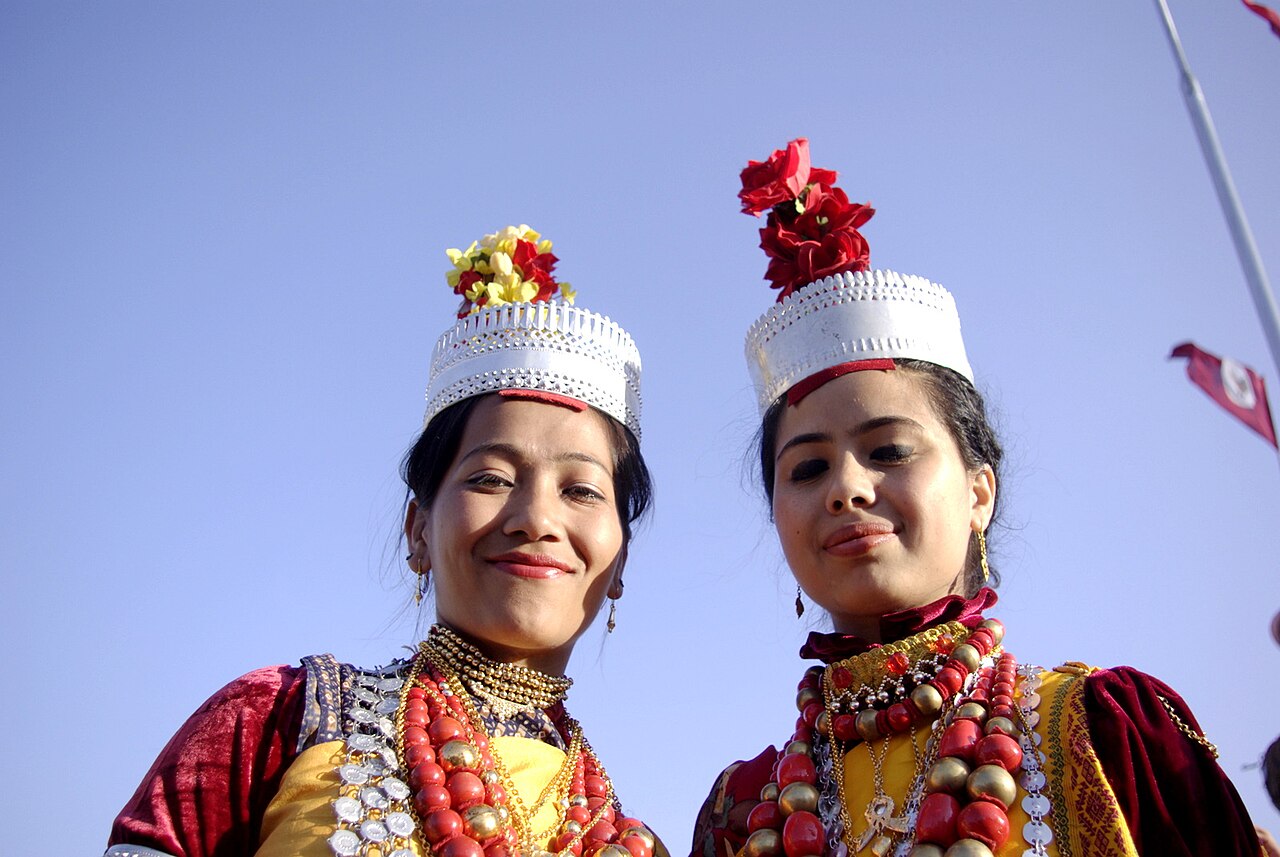
Nongkrem Dance Festival (usually November, near Smit village, 11km from Shillong) is the most important Khasi celebration. It's a five-day harvest festival with a ritual sacrifice, prayers, and traditional dancing performed by young women in extraordinary attire: silk dresses, silver crowns, and heavy gold jewellery. It draws visitors from across India, but it still retains a genuine ceremonial weight — this isn't performed for tourists, it's performed for the community. Visitors are welcome to watch respectfully.
Ka Shad Suk Mynsiem — literally "Dance of the Joyful Heart" — happens in April at the Weiking Ground in Shillong. Post-harvest dancing by men and women in full traditional dress. The atmosphere is festive and the colour is extraordinary.
Behdeinkhlam is a Jaintia Hills festival (July, in Jowai) featuring enormous wooden towers called *rots* carried through the streets in procession. It was originally meant to ward off disease and bad fortune. The energy is chaotic and wonderful.
Planning to visit?
Private cab from ₹4,500 · Local driver · Book free, pay a token to confirm
The Music That Shillong Made Famous
Khasi traditional music uses instruments you won't find in most Indian cities — the *ksing* (drums), *tangmuri* (a wind instrument that sounds a bit like an oboe), *duitara* (a plucked string instrument), and *maryngod* (cymbals). These appear at festivals and ceremonial events.
But Shillong's bigger musical story is what happened when all of this met rock and roll. The city has produced more per-capita guitar players than anywhere in India. The Lou Majaw has been called India's Bob Dylan. The Shillong Chamber Choir has won international competitions. Cloud 9 and Café Shillong host live music most evenings. If you're there on a weekend, go find it.
What You'll See in the Villages
Traditional Khasi dress — the silk *jainsem* for women, the *jymphong* for men — is still worn at festivals and special occasions, though daily life has moved to contemporary clothing. In villages like Mawlynnong or Mawphlang, older women sometimes still dress traditionally on ordinary days.
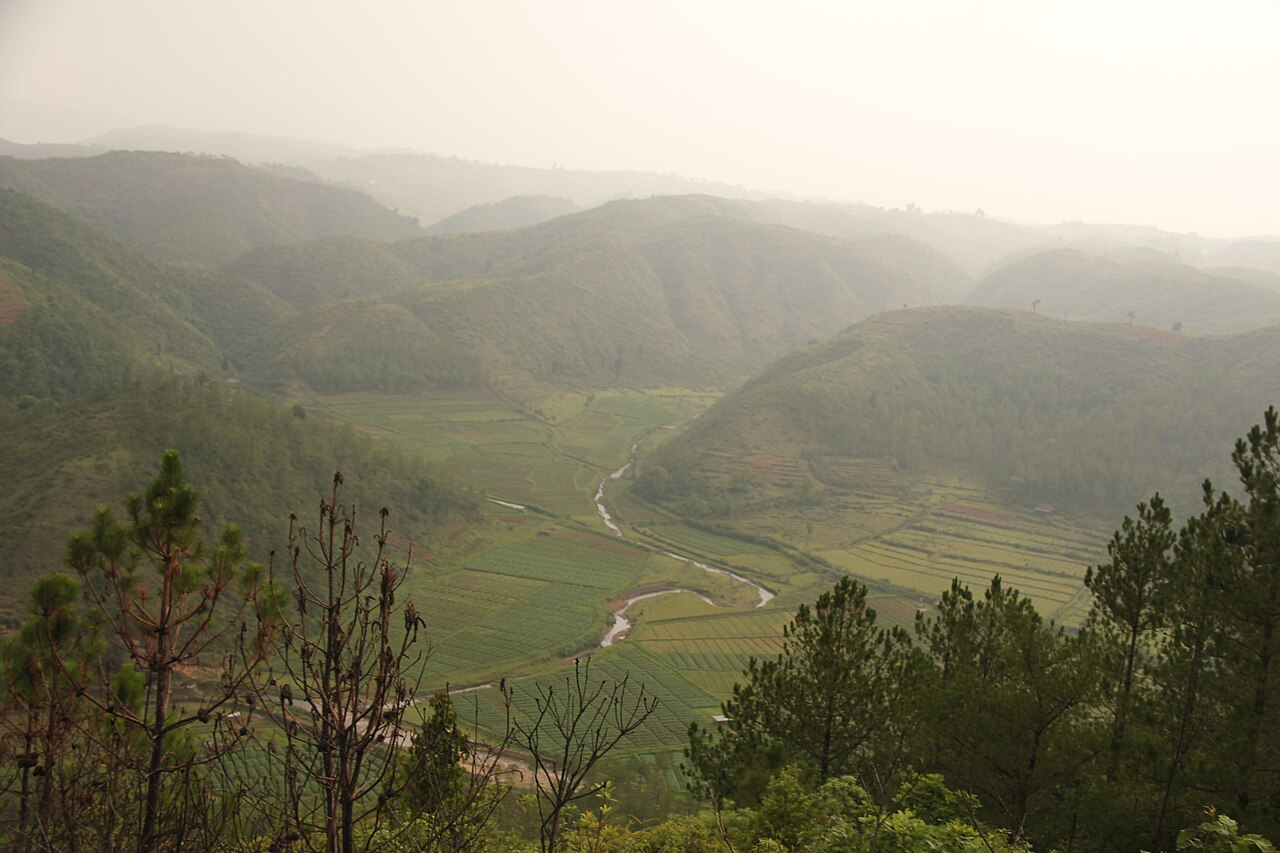
The sacred groves (*law kyntang*) scattered across the Khasi Hills are one of the most striking things about the culture. These forest patches have been protected for centuries under customary law — no cutting, no hunting, no disturbance. The result is that they contain some of the most biodiverse patches of forest left in Northeast India, preserved entirely by tradition rather than government policy.
Before You Visit a Khasi Village
When visiting villages like Mawlynnong, Smit, or Mawphlang:
The Khasi people are warm and welcoming. A visit to a traditional village is one of the most memorable experiences Meghalaya offers.