"Is the Waterfall Closed Today?"
A few years ago, at the Mawsmai viewpoint on a bright March afternoon, a guest from Delhi looked out at the great bare cliff, turned to me, and asked — in complete seriousness — whether the waterfall was *closed today*.
I've thought about that question ever since, because the honest answer is: yes. Seven Sisters Falls closes. Not for maintenance, not for weather — for the season. From October to May, one of the tallest waterfalls in India simply isn't there. A kilometre of empty limestone, a faint stain where the water once ran, and confused visitors checking their map.
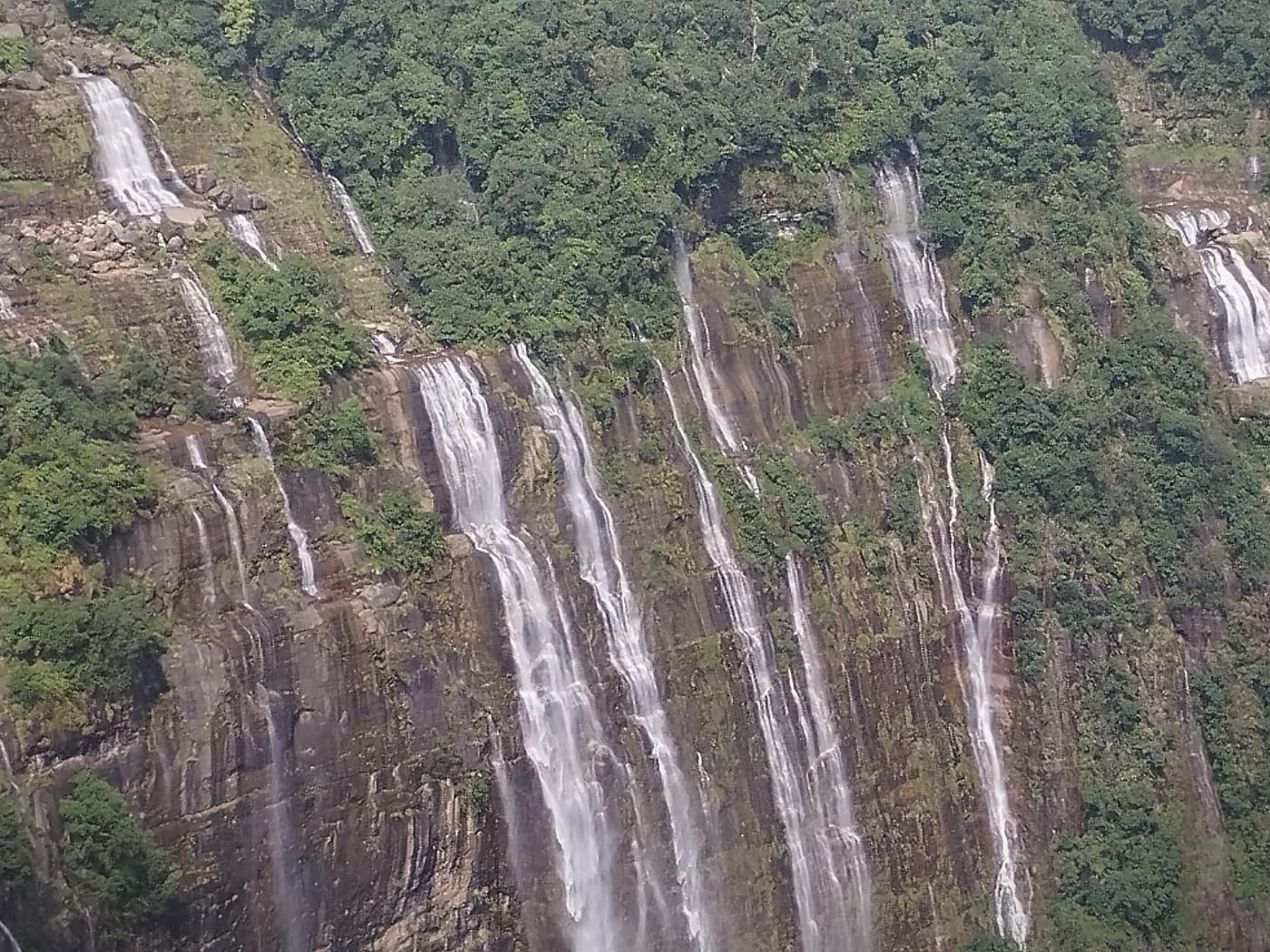
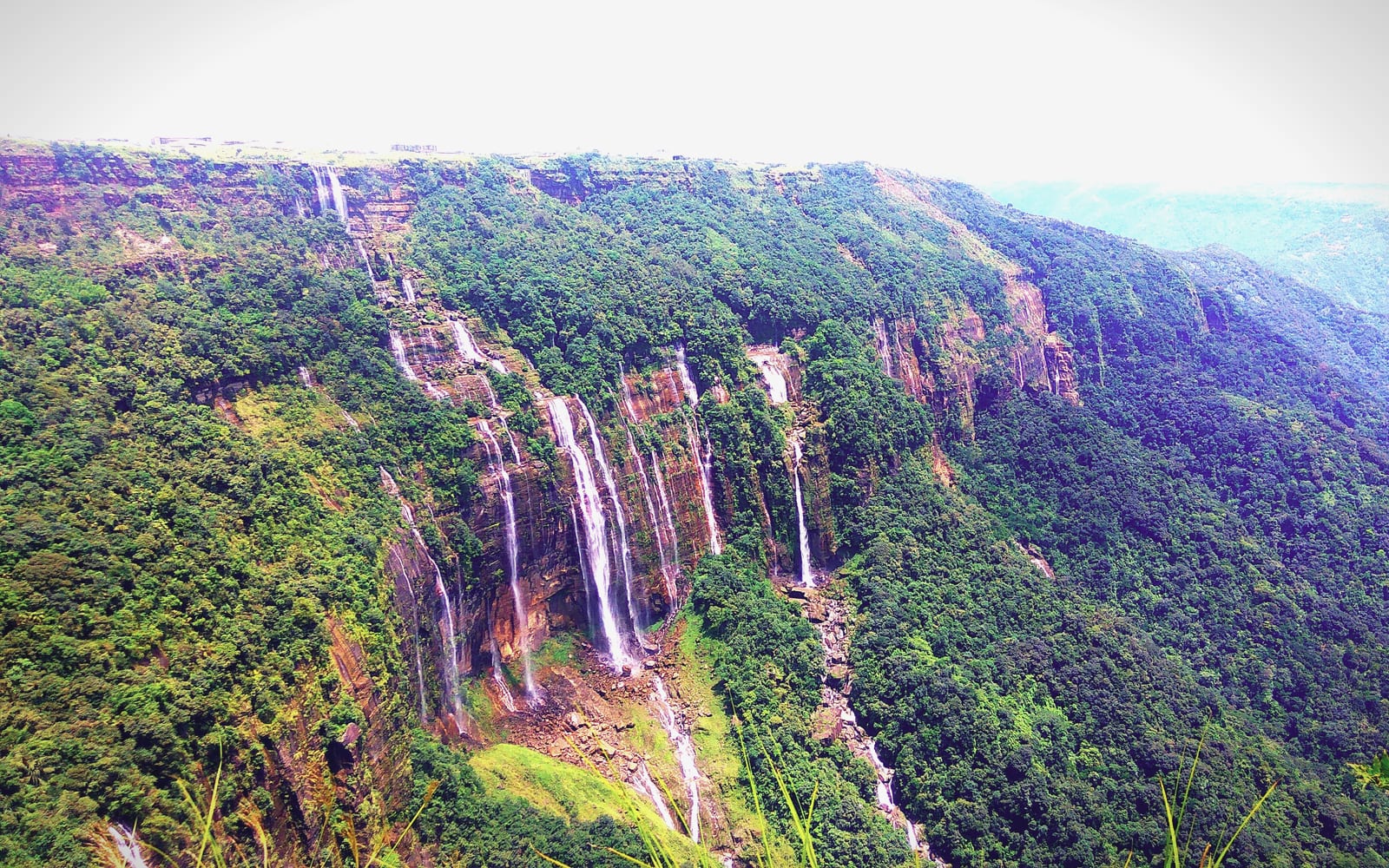
Then June arrives, the monsoon detonates over the Sohra plateau, and within days the cliff performs the greatest reopening act in Indian nature: seven distinct streams, side by side, plunging 315 metres off the southern edge of the Khasi Hills, running fat and white and loud through September.
If Seven Sisters is on your list, understand what that means. A monsoon trip isn't the *better* option. It's the only one.
Seven Streams, Seven Sisters
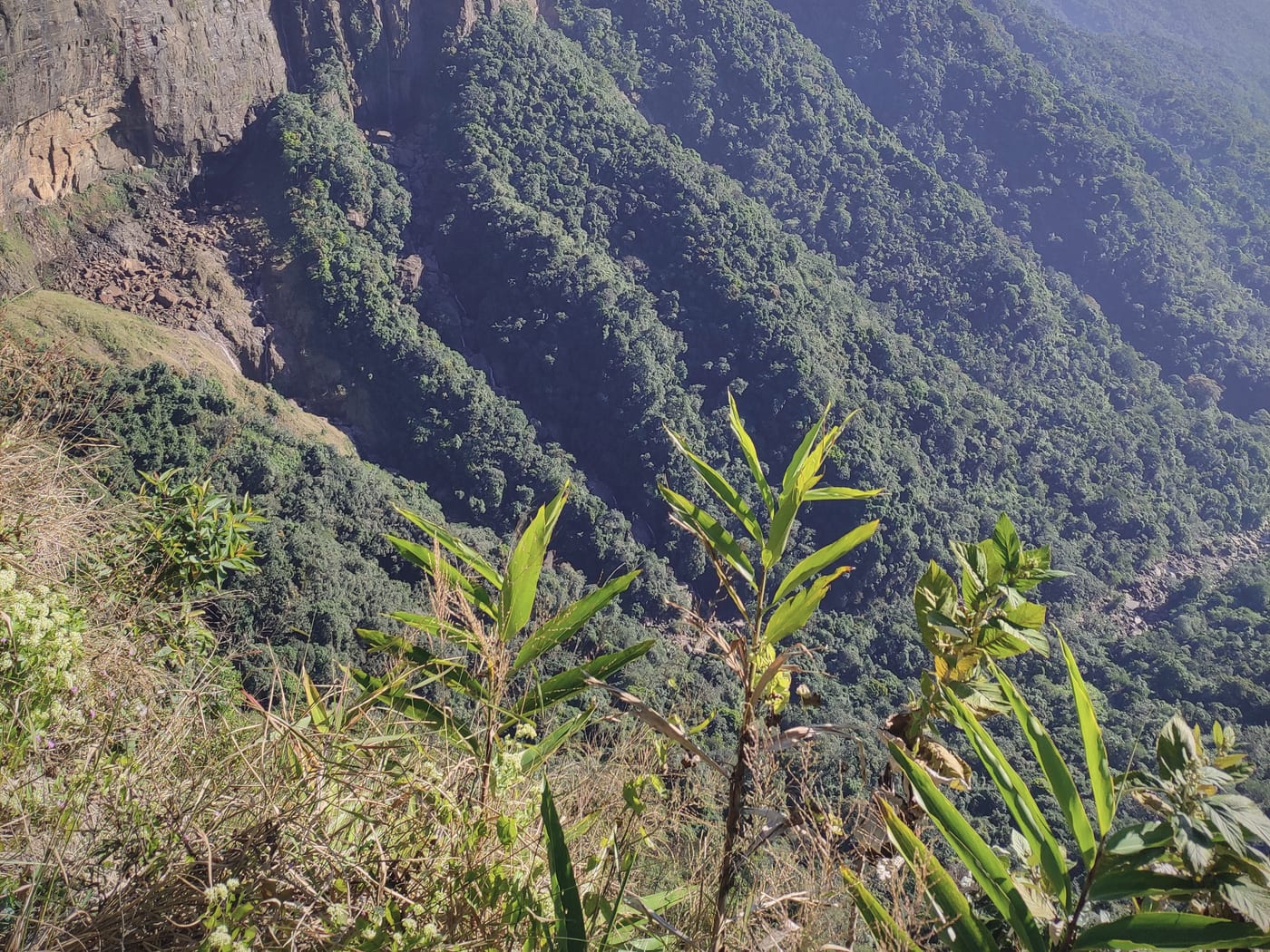
The English name comes easily once you're standing there — seven parallel columns of water, one for each of the seven sister states of Northeast India, as the popular telling goes. The Khasi name is older and lovelier: Nohsngithiang, often translated as *"the place where the sun sets."*
And that name is a viewing instruction. Come between 3 and 5 PM, when the westering light angles into the cliff, and the limestone behind the water ignites amber while the seven streams run silver in front of it. I've watched photographers pack up, walk to the car, and turn around for one more frame three separate times. The light keeps changing. The falls keep winning.
Two Ways to Meet Them
From the side — the Mawsmai viewpoint. The classic angle, free and roadside: a full kilometre of cliff with the streams spaced across it like strings on an instrument. Morning mist is common; by mid-afternoon it usually lifts. And if the viewpoint is socked in when you arrive — wait. Twenty minutes, maybe a chai. Sohra mist moves like a curtain on rails, and the reveal — seven waterfalls materialising out of a white wall — is better than any clear-sky arrival.
Planning to visit?
Private cab from ₹4,500 · Local driver · Book free, pay a token to confirm
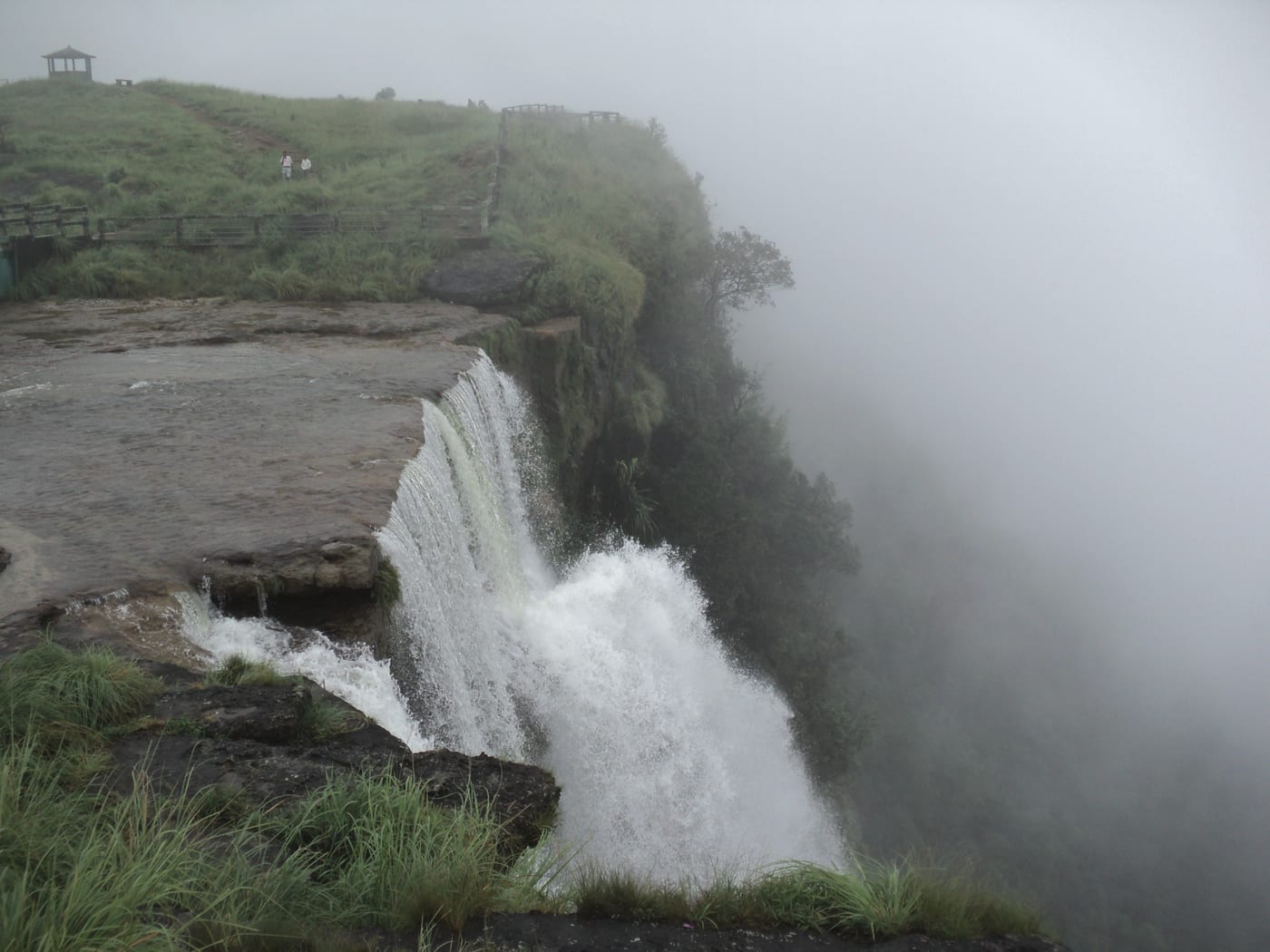
From the top — Eco Park. This is the one that gets people. The streams flow innocently through the park's gardens, gather speed, and then simply *vanish off the edge of the world.* You stand at the railing watching water leap into a 300-metre void, monsoon-flooded Bangladesh glinting silver on the horizon below. Guests grip that railing in a very particular way. Every group has one person who refuses to come close, and one who leans out too far. Our drivers keep a gentle eye on the second kind.
Do both. Ten minutes apart, and they are two completely different waterfalls.
Getting the Timing Right
Come While They're Awake
Seven Sisters sits a kilometre from Mawsmai village, 90 minutes from Shillong, and features in every monsoon Sohra day we run. The sequencing — which fall at which hour, when to wait out the mist, when to give up on a viewpoint and circle back after lunch — is the quiet craft our drivers have built over years of watching this cliff.
WhatsApp +91 8855853857 with your dates. If the sisters are running, we'll get you there at their hour — and you'll never again wonder what "the waterfall is closed" means.