Six Centuries of Ahom Power
Between the 13th and 19th centuries, the Ahom Kingdom ruled Assam for over 600 years — one of the longest-lasting kingdoms in Indian history. The Ahoms, originally a Shan people from present-day Myanmar, built an extraordinary civilization along the Brahmaputra valley, constructing tanks, temples, palaces, and administrative capitals that still stand today.
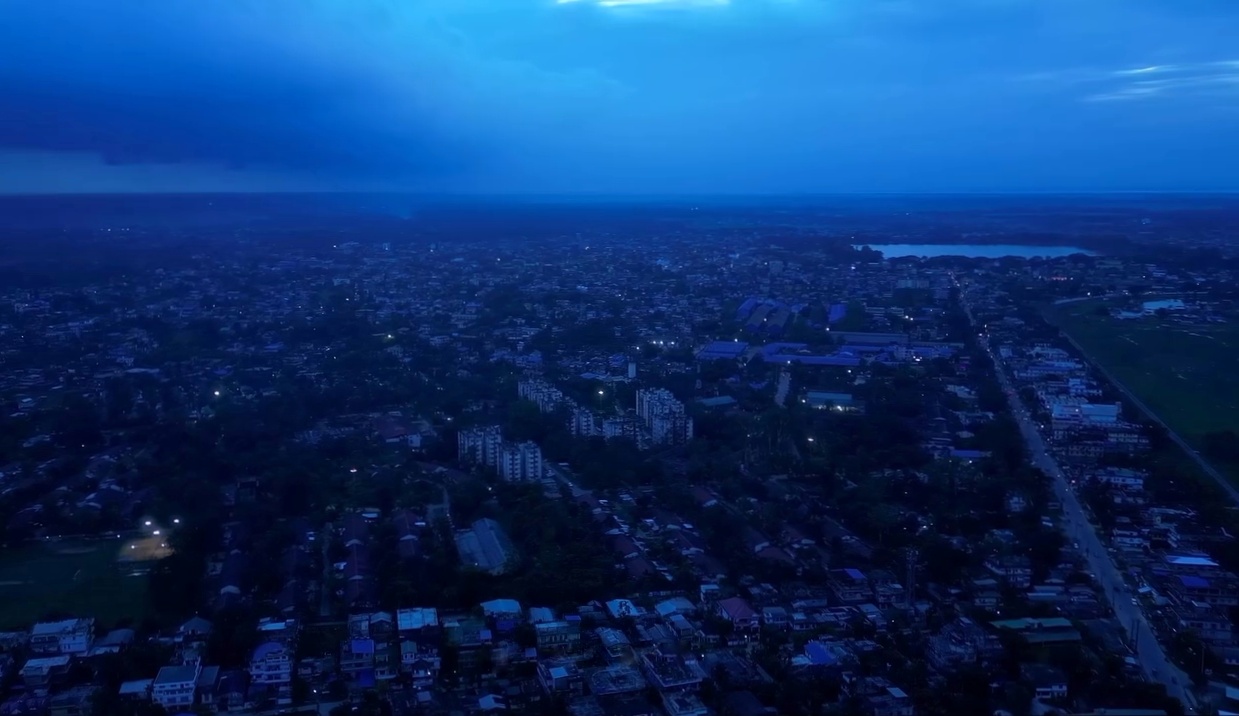
Sivasagar (previously called Rangpur) was one of the Ahom capitals and remains the richest concentration of Ahom heritage in Assam. A day or two in Sivasagar is a journey into a chapter of Indian history that most travelers have never encountered.
The Sivasagar Tank & Sivadol
At the centre of Sivasagar town is the Sivasagar Tank (also called Borpukhuri) — a massive artificial lake dug by Ahom queen Madambika in 1734. At 1.3km in length and over 800m wide, it is one of the largest man-made tanks in India.
On the banks of the tank stand three remarkable temples:
The ensemble of tank and temples reflected in the still water is one of the most photogenic scenes in Assam.
Rang Ghar: Ahom Amphitheatre
About 5km from Sivasagar town, Rang Ghar is arguably the most remarkable Ahom monument — a two-storey oval amphitheatre built in the 18th century, used for watching elephant fights and other royal sports. It is one of the oldest surviving amphitheatres in Asia.
The structure is built of brick, with an unusual concave boat-hull roof. The scale and sophistication of the architecture surprises most visitors — this is not what people expect from 18th-century Northeast India.
Talatal Ghar: The Underground Palace
The Talatal Ghar (or Talatalghar) at Rangpur is the largest Ahom monument in existence — a seven-storey palace complex of which four storeys are underground. The subterranean levels include a network of passages, secret rooms, and tunnels — some reportedly leading to the Dikhow River 3km away, used for emergency escape.
The architecture is entirely brick, built without mortar in places. The underground levels are only partially accessible to visitors but the structure above ground is already impressive.
Kareng Ghar
Planning to visit?
Private cab from ₹4,500 · Local driver · Book free, pay a token to confirm
Another royal palace complex 5km from Rangpur, Kareng Ghar (Garhgaon Palace) served as the Ahom capital from 1540 to 1699. The remaining structure is a four-storey brick palace. The site has a peaceful, slightly melancholy atmosphere — a great royal capital now empty in the middle of farmland.
Joy Sagar Tank
Near Joysagar village, this massive tank (3km × 1.5km) was dug in 1697 by the Ahom king Sukhrungphaa in memory of his mother. On its banks are more Ahom temples — Joysagar Sivadol, Vishnu Dol, and Devi Dol.

Getting to Sivasagar
When to Visit
Sivasagar is accessible year-round. October to March is most comfortable. Monsoon (June–September) brings heavy rain but the tanks and temples look spectacular reflected in flooded surroundings.
Tips
Sivasagar can be combined with a Guwahati–Kaziranga–Jorhat–Dibrugarh circuit. Meghalaya Cabs operates Assam driving tours starting from Shillong — including Upper Assam heritage circuits. Book your trip online →